
Brand detection
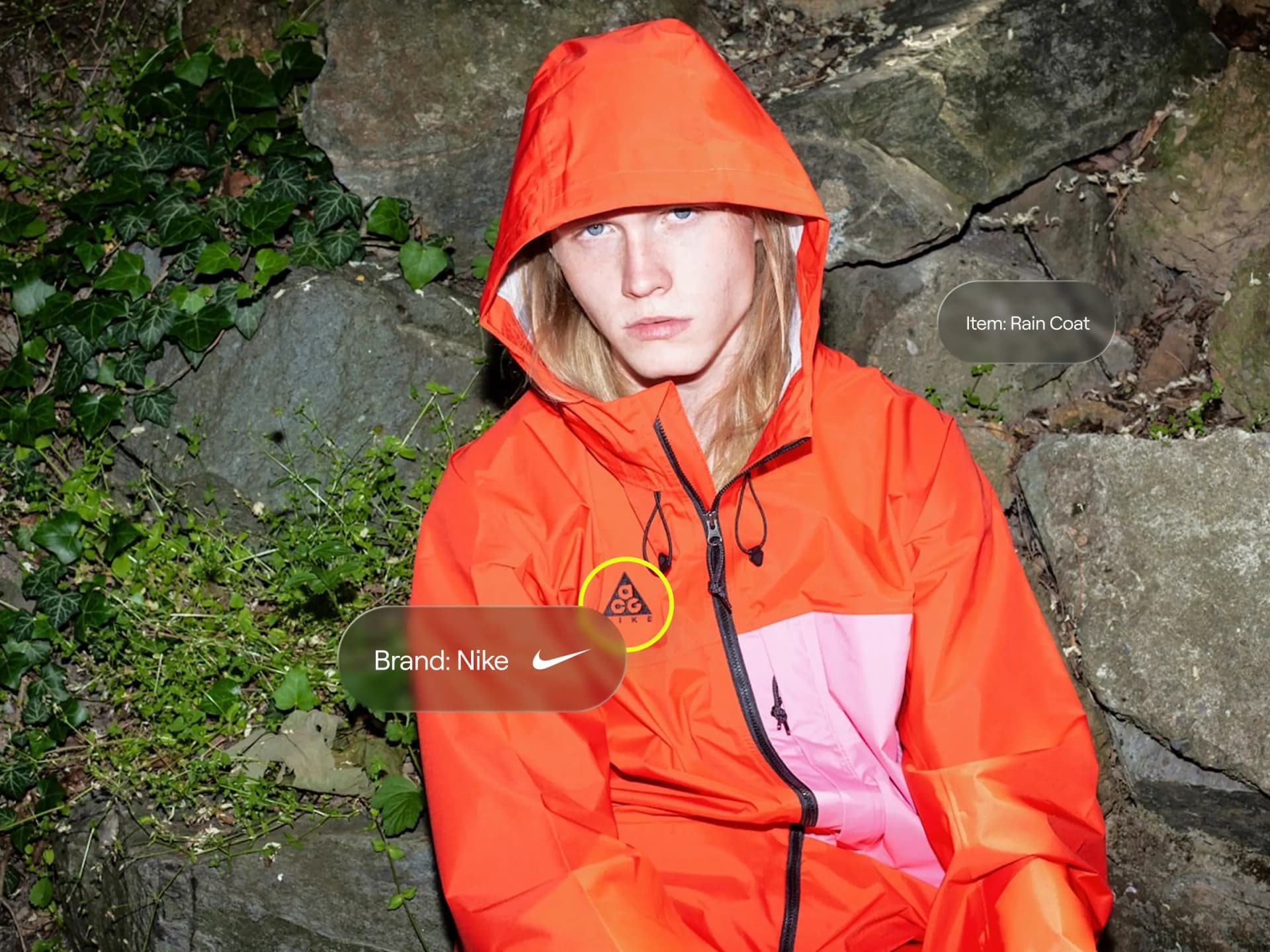
Brand intelligence at scale. Computer vision identifies 50+ brand items across various categories.

You're sponsoring audiences you can't describe. And pricing deals on gut feeling. Brand detection changes that.
Sponsorship decks are built on reach and demographics. No one can tell you what brands your fans actually consume. That data required expensive research panels with small samples and long turnarounds. Brand detection changes that.
You're sponsoring audiences you can't describe. And pricing deals on gut feeling. Brand detection changes that.
Sponsorship decks are built on reach and demographics. No one can tell you what brands your fans actually consume. That data required expensive research panels with small samples and long turnarounds. Brand detection changes that.
We see what surveys can't ask.
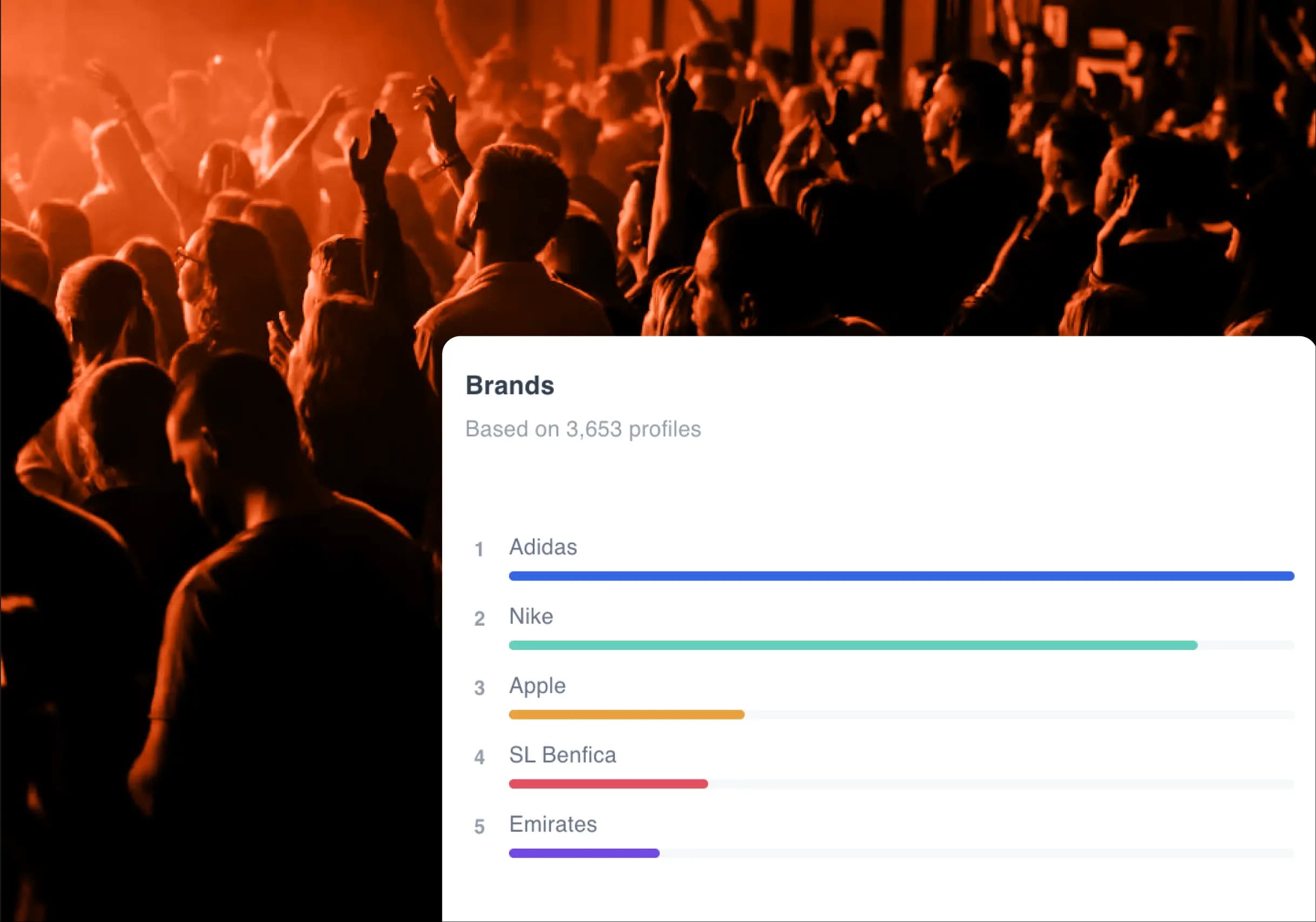
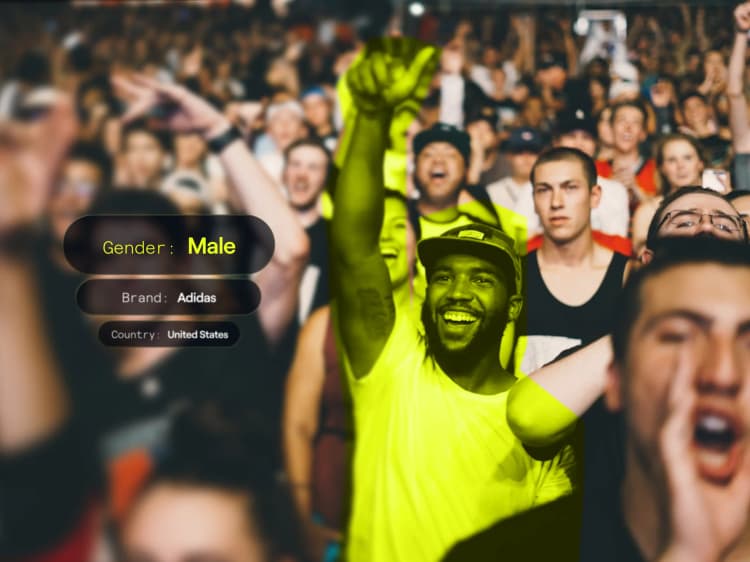
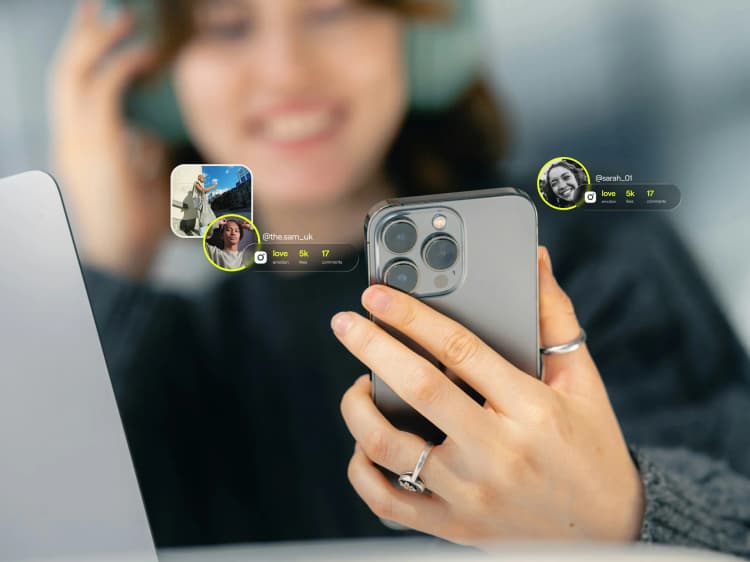
The AI audience intelligence platform's models analyze data to detect brand items worn, used and displayed by your audience. The system identifies 50+ specific items across multiple brand categories. Every detected brand affinity is linked to an individual profile, enabling continuous brand tracking cross-referenced with demographics, emotions, location and behavioral data.
Every brand category that matters to your business.
Fashion
Clothing brands, luxury labels, streetwear. Know whether your audience wears Gucci or Zara, Supreme or H&M.
Sports
Athletic brands, team merchandise, sports equipment. Nike vs. Adidas vs. Puma. Data that drives sponsorship decisions.
Automotive
Vehicle brands detected in profile photos. Premium vs. mass market. Critical for automotive sponsorship valuation.
Electronics
Tech brands, smartphones, headphones, wearables. Apple vs. Samsung. iPhone vs. Android. Real device preference data.
Beauty
Beauty and personal care brands. Cosmetics, skincare, grooming. Audience affinity data for beauty sponsorship activation.
Retail
Retail and e-commerce brands identified across your audience. High street vs premium. Where your audience actually shops.
Food & Beverage
Food and drink brands visible in audience photos. From energy drinks to fast food to premium beverages. Consumption data at scale.
Health
Health and wellness brands across supplements, fitness equipment and activewear. See which health brands your audience trusts and uses.
What brand detection makes possible.
Sponsorship Intelligence
- Show potential sponsors exactly how many and who in your audience already uses their brand.
- Prove audience-brand fit with data, not assumptions.
- Extend brand detection to influencer audiences to see which brands an influencer's community uses before you invest in a partnership.
Competitor Analysis
- See what brands your competitor's audience prefers vs yours.
- Identify overlap, gaps and opportunities.
- Build partnership strategies based on audience brand affinity data across markets.
Audience Monetization
- Quantify the commercial value of your audience based on their actual brand consumption.
- Premium brands in your fanbase mean premium sponsorship pricing opportunity.
- Back it up with real data.
See what brands your audience actually uses.
Brand detection is stronger with context.
Questions answered
Brand detection uses computer vision to identify 50+ brand items worn, used and displayed by your audience across their social media profiles. Every detected brand is linked to an individual profile, creating a complete picture of your audience's brand affinities.
Our computer vision models are trained on millions of images and continuously improved. Detection covers 14 brand categories with high accuracy, identifying specific brands rather than just product categories.
Yes. Brand detection data shows exactly what percentage of your audience uses specific brands. This transforms sponsorship proposals from assumption-based to evidence-based, proving audience-brand fit with real data.
Yes. Brand affinity is one of 250+ filters available in audience segmentation. You can find everyone in your audience who uses Nike, drives BMW, or wears Gucci — and cross-reference with demographics, emotions and location.